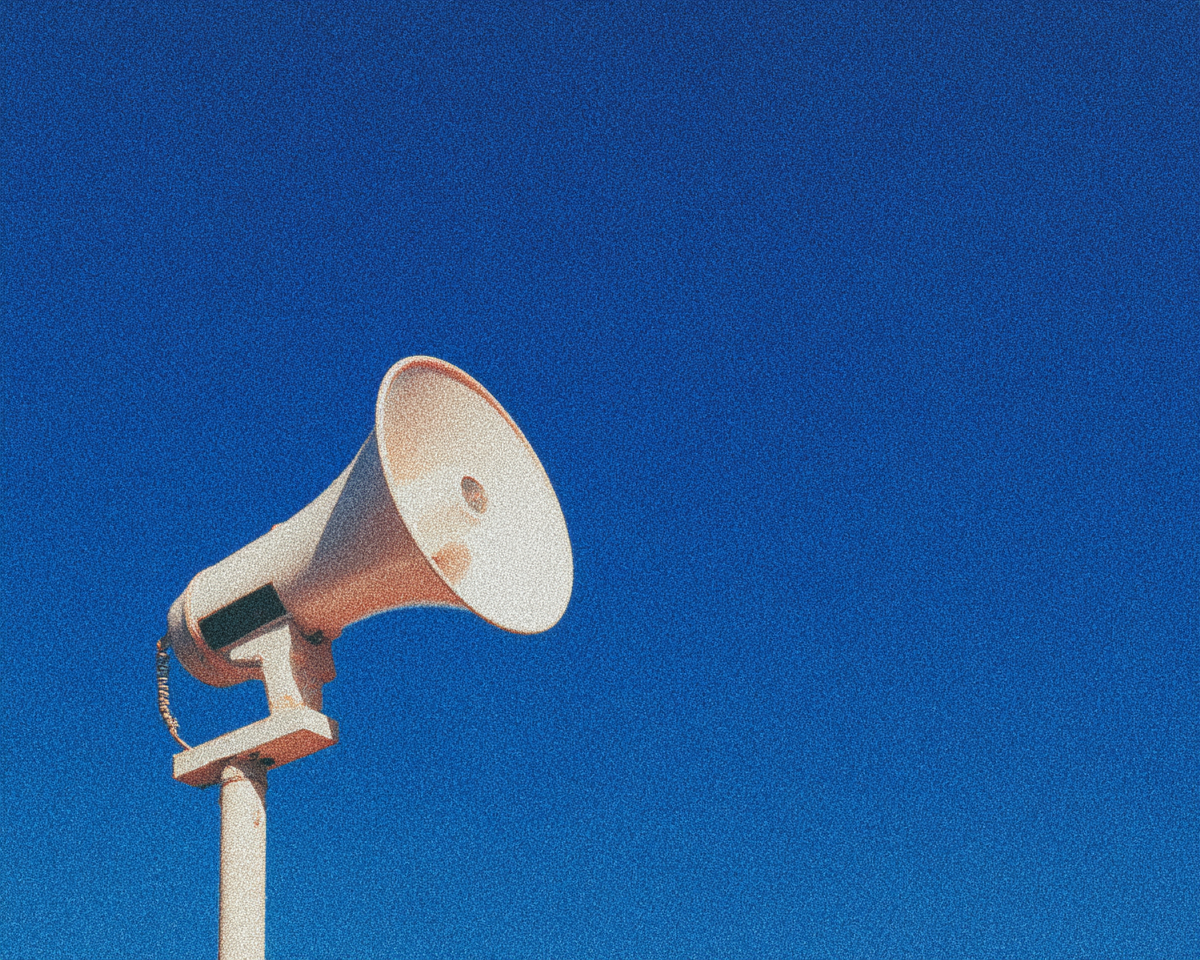
"Attention! Attention! Attention!"
The parrot was screaming from the canopy of a lush tropical island, its voice cutting through the humid air like a bell.
"Attention to what?" the visitor asked.
"Well…" She searched for the right words in which to explain the self-evident to this strange imbecile. "That's what you always forget, isn't it? I mean, you forget to pay attention to what's happening. And that's the same as not being here and now."
This scene takes place in Island, the final novel Aldous Huxley ever wrote. A parrot, trained to repeat one word, doing what most of us fail to do for ourselves: reminding someone to be present. Huxley was onto something. Something worth paying attention to. This blog is about that something.
Attention to attention
Attention is one of the most important and most overlooked phenomena in human life. Every single thing you have ever perceived has been filtered by it. Two people can sit through the same conversation and walk away with completely different takeaways. One might have caught the hesitation in someone's voice, the other missed it entirely. Same room, same words, different realities. Two people in the exact same situation, yet based on what they attended to, they will have profoundly different experiences. Different memories. Different lessons. Different lives.
Attention is the product of hundreds of millions of years of evolution. But humans developed something extraordinary: the ability to direct attention anywhere, even inward. We can reflect on our own thoughts, project ourselves into the future, and revisit moments long gone. No other species does this. It is one of the most peculiar abilities nature has produced.
It is also one of the most dangerous. The same ability that lets us plan and create also lets us daydream over our next vacation spot, missing out on an important detail during a meeting. Or makes us bump into a person in a hallway, leaving the impression of an absent-minded person. "Oh, sorry, I didn't see you there". Or makes us worry about things that may never happen, or repeatedly regret things we cannot change. Our attention, untethered from the present, becomes a source of suffering.
On top of this vulnerability, we now face a new challenge: the most sophisticated technologies ever built is competing for our attention, engineered to keep us engaged, and to keep us watching.
In this environment, the ability to direct your attention to where you choose is a superpower. I say this as someone who has spent most of his life struggling with it.
The practice
For most of my life, my attention was scattered. Focusing on things that did not captivate me felt like pushing a boulder uphill. That included more or less every single class in school. Thankfully, the library was always open, and the school fence was rather low and easy to climb.
On one of the daily library visits, I stumbled upon a book: The Science of Meditation: How to Change Your Brain, Mind, and Body. By that time, I had been diagnosed with ADHD, so the idea of rewiring my brain through meditation was life-altering. At 15, I started meditating for half an hour every day. It is the best thing I have ever done. Slowly, I could see the transformation: I started to pay attention to my attention. It gave me deep insight into my own consciousness, my own sense of self, and my relation to the world. And it gave me something I never had before: the ability to navigate life with intentionality. Much of what I have done since, I can attribute to this ability.
The enemy with a gift
But in all those years of building this practice, there was also an adversary. Social media. As a teenager, I spent hours on Instagram and YouTube. It was a habit I could not fully control. The dopamine high of scrolling took up time from sleep, from socializing, and from any other activity that society would endorse. Sometimes I'd torment myself thinking that those hours were simply lost.
But, if I am honest with myself, the picture is more complicated than that. So many of the things I fell in love with were introduced to me by the algorithm. Brazilian jiu-jitsu. The wonders of biology and evolution. Countless rabbit holes I dove into with pure fascination. I would not be myself if I had never been exposed to these inspirations.
This is what makes the problem so tricky. The inspirations are real. The curiosity they spark is real. But the gems are scattered across a minefield. They are buried inside systems whose only purpose is to hijack your attention. To keep you glued to the screen, and keep you just entertained enough to make the next scroll.
If only there was a way to keep the positives, the inspirations, and the insights without the dangers of sliding into the shameful bottoms of doomscrolling.
Is there something we can do?
Regain your agency and train your attention. This is the single greatest meta skill you can attain. It compounds into everything. Your relationships, your work, your creativity, your peace of mind. Be aware that if you have been doomscrolling for a while, it will take a bit of practice and time. You can start with mindfulness meditation, even ten minutes a day. You are not training yourself to think about nothing, you are training yourself to notice where your mind goes, and to gently bring it back. That is the whole practice, and it changes everything.
Another step you might consider, is to use your technology with more intention. Try asking yourself each time you reach for your phone or open your laptop: why? If the answer is a deliberate task, something you chose, go ahead. If you cannot answer why, you will probably find yourself doomscrolling within minutes. The question itself is the intervention.
Now the only thing left to do is commit. When something genuinely interests you, give it your full attention. Whether it is a book, a podcast, or even a blog post, take the time to engage with it without distractions. Let yourself sit with the ideas. Ask yourself how they connect to your own life, your own maps of meaning. This is the difference between knowledge that transforms you and content that merely entertains you.
If you want to be able to practice your agency when engaging with your ideas and inspirations, and curate your knowledge so it may compound, you can check out MindStash. Something we are building for people who want to be in control when it comes to their own attention.
Attention. Attention. Attention is all you need. (In the here and now.)
Notes
Aldous Huxley, Island (1962). Huxley's final novel, written as a utopian counterpart to Brave New World.
Daniel Goleman and Richard J. Davidson, Altered Traits: Science Reveals How Meditation Changes Your Mind, Brain, and Body (2017).